


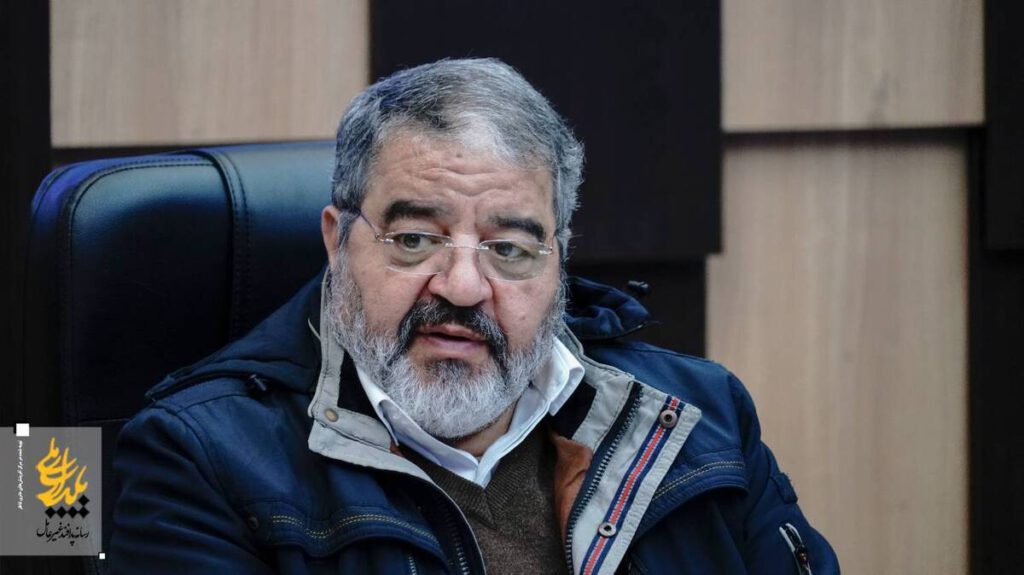
According to the National Sustainability News Agency, a meeting of the deputy heads of urban services of the country’s major cities on the topic of establishing the operational headquarters of Lieutenant General Shahid Bagheri was held by the Tehran Municipality Crisis Prevention and Management Organization, with the presence of General Dr. Gholamreza Jalali, head of the country’s Passive Defense Organization, and Ali Nasiri, head of the Tehran Crisis Prevention and Management Organization.
In this meeting, General Jalali first explained the dimensions of Iran’s victory in the recent 12-day war and explained the vital role of urban infrastructure in national deterrence.
Emphasizing the Supreme Leader’s decree on maintaining maximum readiness, he outlined a new model of confrontation with the enemy in the areas of cyber, infrastructure, and narrative warfare.
The head of the country’s Passive Defense Organization continued to analyze the enemy’s strategic failure in the 12-day war and said: “Despite its technological superiority, the enemy made a strategic mistake in three areas. First, they misjudged the response power, meaning they did not think our armed forces would respond so decisively.”
He continued: In the field of defense resilience, they also thought that the country’s defenses would collapse with the physical elimination of commanders or cyber attacks on banking infrastructure; while the replacement of commanders was carried out in the shortest possible time.
According to Sardar Jalali, strengthening national cohesion despite the enemy’s efforts to create a rift between the people and the government was another strategic mistake that the enemies of the Iranian nation committed, and their hostile actions were practically neutralized.
The country’s four key strategies to confront future threats
The head of the country’s passive defense organization went on to explain the country’s roadmap for confronting possible enemy scenarios in four operational axes and noted: First, reconstruction and strengthening of the defense force must be put on the agenda. This means 24-hour activity of the defense industries to eliminate the bottlenecks identified in the war, enhance defense power, and modernize defense systems.
He continued: The second step is to protect the economic flow. This means that the government must strive to neutralize the shadow of war on the economy and continue investments.
Sardar Jalali considered the next step in winning the war of narratives and noted that we must work with the strategy of disappointing the enemy and maintaining national morale and authority in public opinion.
Infrastructure sustainability was another step that the head of the country’s passive defense organization emphasized the need to pay attention to and said: Protecting and caring for the vital service network for the people must be followed with great care and sensitivity.
The importance of infrastructure and the enemy’s focus on the supply chain
He continued by explaining the concept of infrastructure warfare and warned that the enemy is seeking to identify the basic nodes in urban service systems.
According to Sardar Jalali, the enemy is looking for infrastructures that society’s life and livelihood depend on the most and to make it difficult to return to normal service in those infrastructures. This means that their goal is to attack the supply chain of essential goods and services for the people.
He called on municipalities to take steps to strengthen these nodes by accurately identifying the vital infrastructure of the urban system and their intersection points.
Chemical Hazard Management and High-Risk Urban Centers
The head of the country’s Passive Defense Organization continued to address the management of hazardous materials in urban environments and, referring to the instructions of Martyr Arefian and Martyr Sayyad, emphasized the need to evacuate unnecessary chemical tanks in critical situations.
The obligation of agencies to develop continuity of operation plans
Sardar Jalali also listed the main duties of service agencies and noted: Being prepared for immediate and emergency action at the moment of an accident, predicting service alternatives, ensuring continuity of operation, and reducing reconstruction time and rapid recovery are among the requirements that service agencies must follow seriously.
According to the head of the country’s Passive Defense Organization, even measures such as urban beautification and rapid cleaning of the effects of attacks are part of the media defense to neutralize the psychological effect of enemy attacks and can diminish the effects of enemy actions in public opinion.